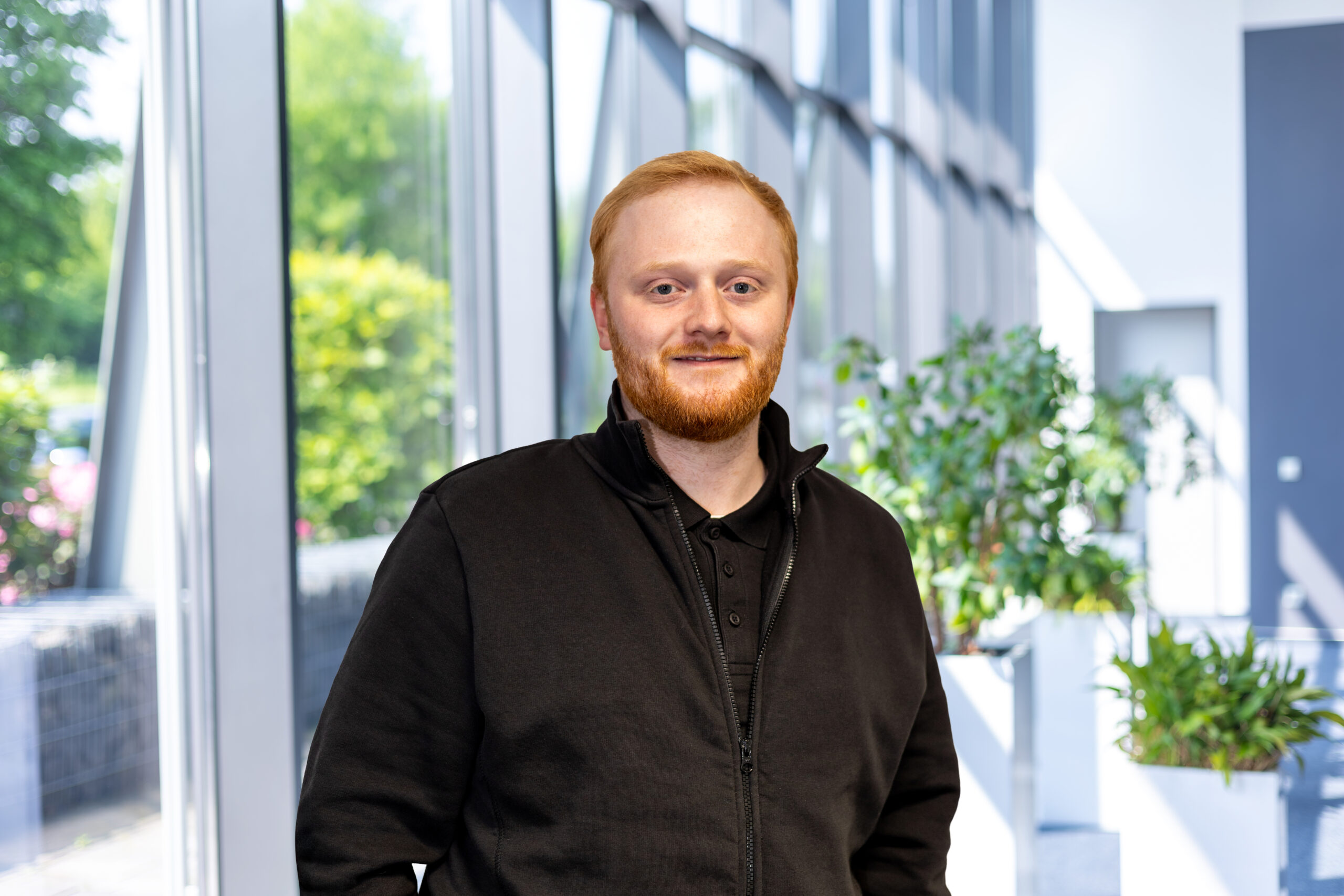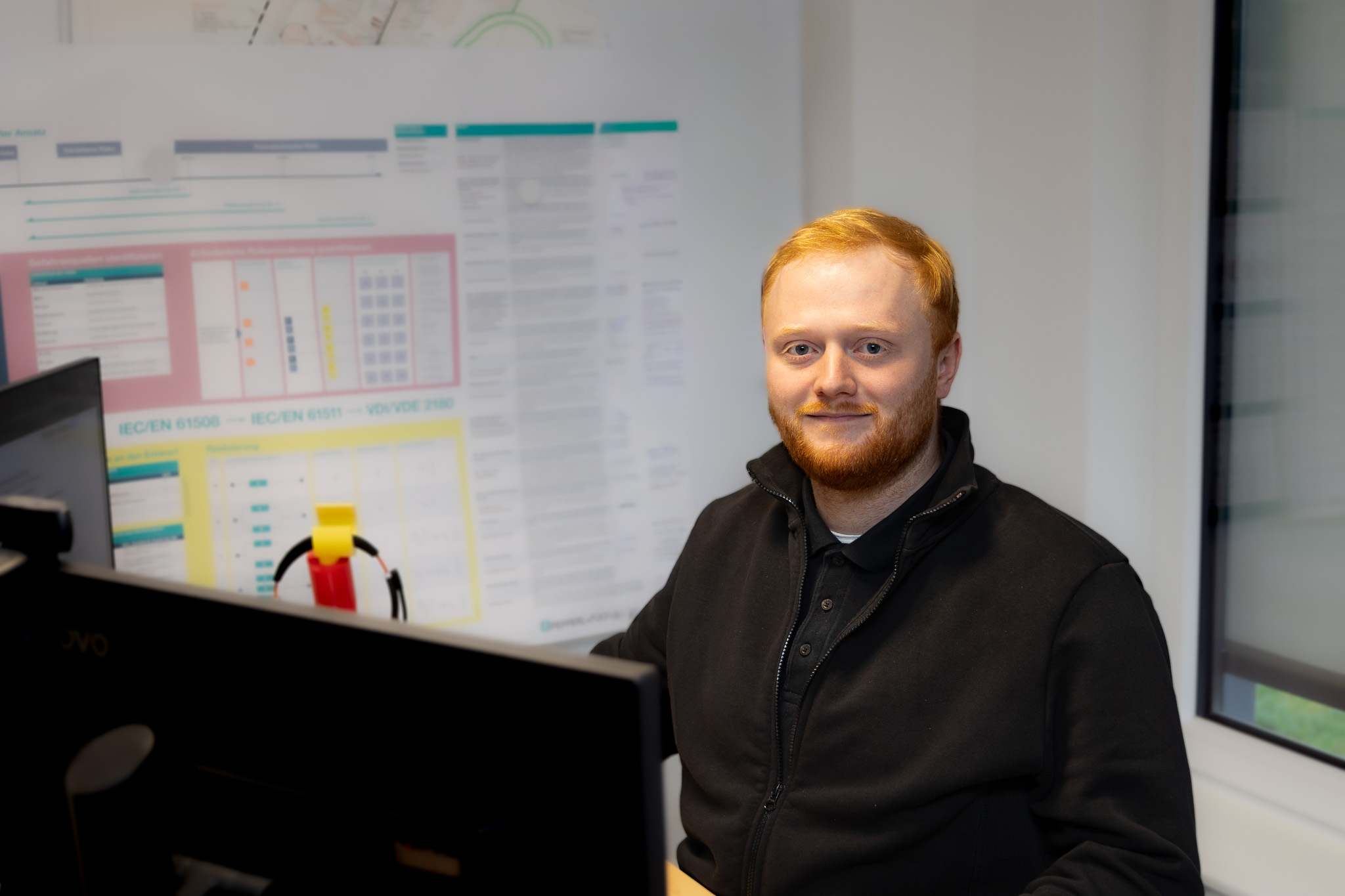
Markus Niemann:
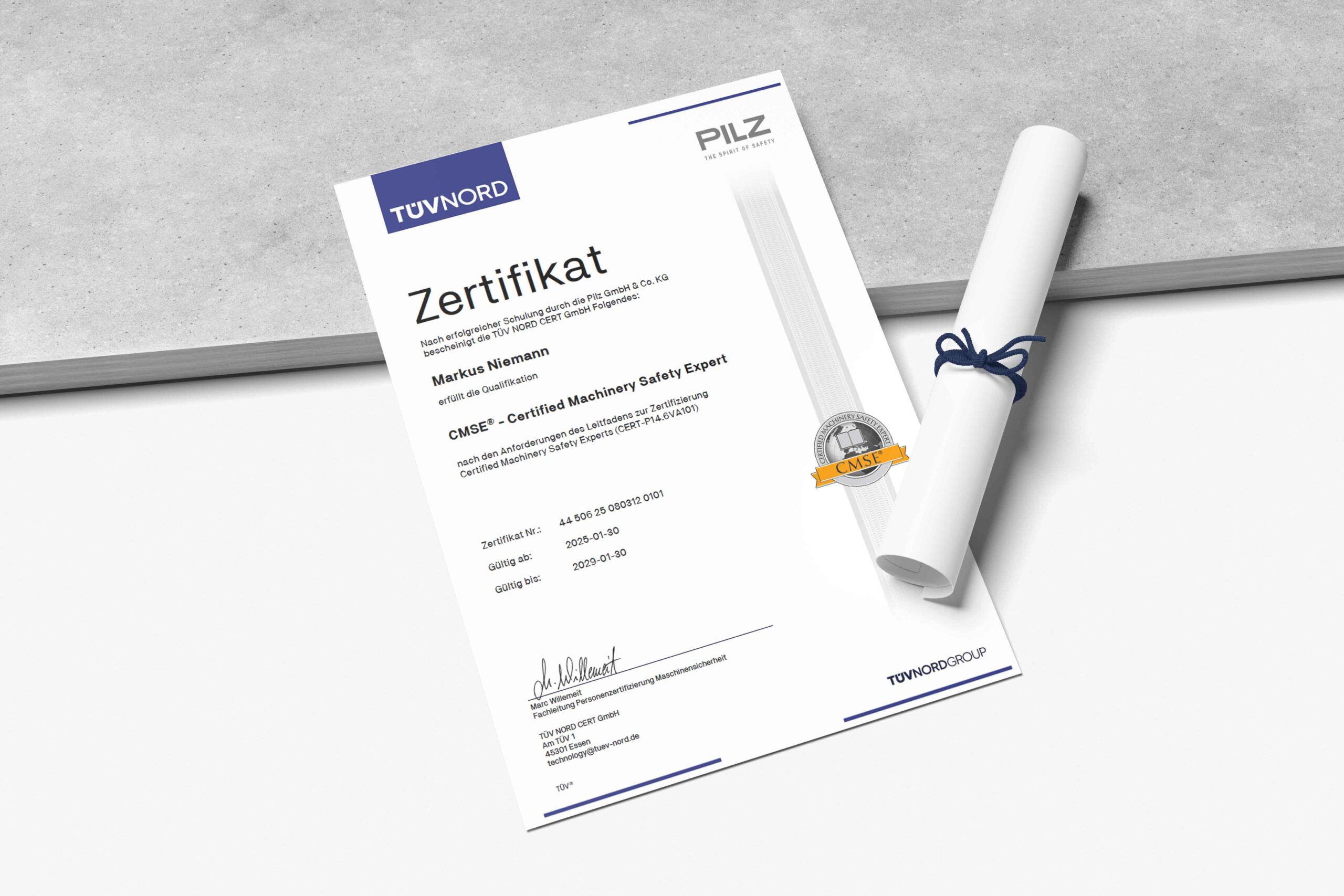
CMSE® – Certified Machinery Safety Expert
Markus Niemann has extensive expertise in functional safety for machinery and in the process industry.
His knowledge has now also been officially certified: in this interview, he explains how he applies his new qualification as a CMSE® – Certified Machinery Safety Expert at SCHULZ in practice.
Markus, you have been with SCHULZ for just over two years. How did you start back then?
I work in the specialist planning team within the Biogas division. That means I plan and design conversions and expansions of biogas plants, coordinate with site managers and technicians, calculate cable cross-sections and deal with topics such as functional safety. It’s a highly technical but also very varied role – you’re constantly learning.
At the beginning of the year, you completed a training course. What was it about?
It was an intensive course preparing for certification as a CMSE® – Certified Machinery Safety Expert – a four-day training programme in Stuttgart, supported by TÜV Nord. Every day ran from 8 a.m. to 6 p.m., followed by a demanding final examination. The exam consisted of an extensive set of questions, and I had to achieve at least 80% correct answers to pass. So it was definitely not a walk in the park. I studied late into the evening to make sure I had fully mastered the content.
What concrete benefits has the training brought to your daily work?
Above all, a deeper understanding of functional safety – in other words: how to ensure that machines, systems and control units genuinely operate safely.
I am now responsible for SIL verification within our team. This is the process used to verify whether the requirements of a specific Safety Integrity Level (SIL) – the required safety performance level – are met.
SIL verification ensures that the reliability of a system is sufficient to prevent hazardous events in an industrial process and to reduce residual risk to an acceptable level.
This is always carried out in close coordination with the project manager – because, as we say, four eyes see more than two.
That sounds complex. What does it look like in practice?
Essentially, it involves calculating and assessing safety-relevant components. We must provide evidence that every component meets the required standards. Fortunately, comprehensive technical data sheets make this work much easier. Without that documentation, the effort involved would be enormous.
In your opinion, what is the biggest challenge in this field?
Keeping an overview, without question. There are countless standards and definitions – from VDI 2180 to IEC 61508. In addition, security is becoming increasingly important.
A useful rule of thumb is: safety protects people from machines – security protects machines from people. We must always consider both aspects together.
And finally – is the certificate already on the wall?
Of course! I printed it out straight away. It feels good to have achieved something that not only supports me in my daily work, but is also becoming increasingly relevant for our customers in the biogas sector. And who knows – perhaps a few more colleagues will follow soon!