Consistent building concept for sustainable production
New hall for Pöppelmann KAPSTO®
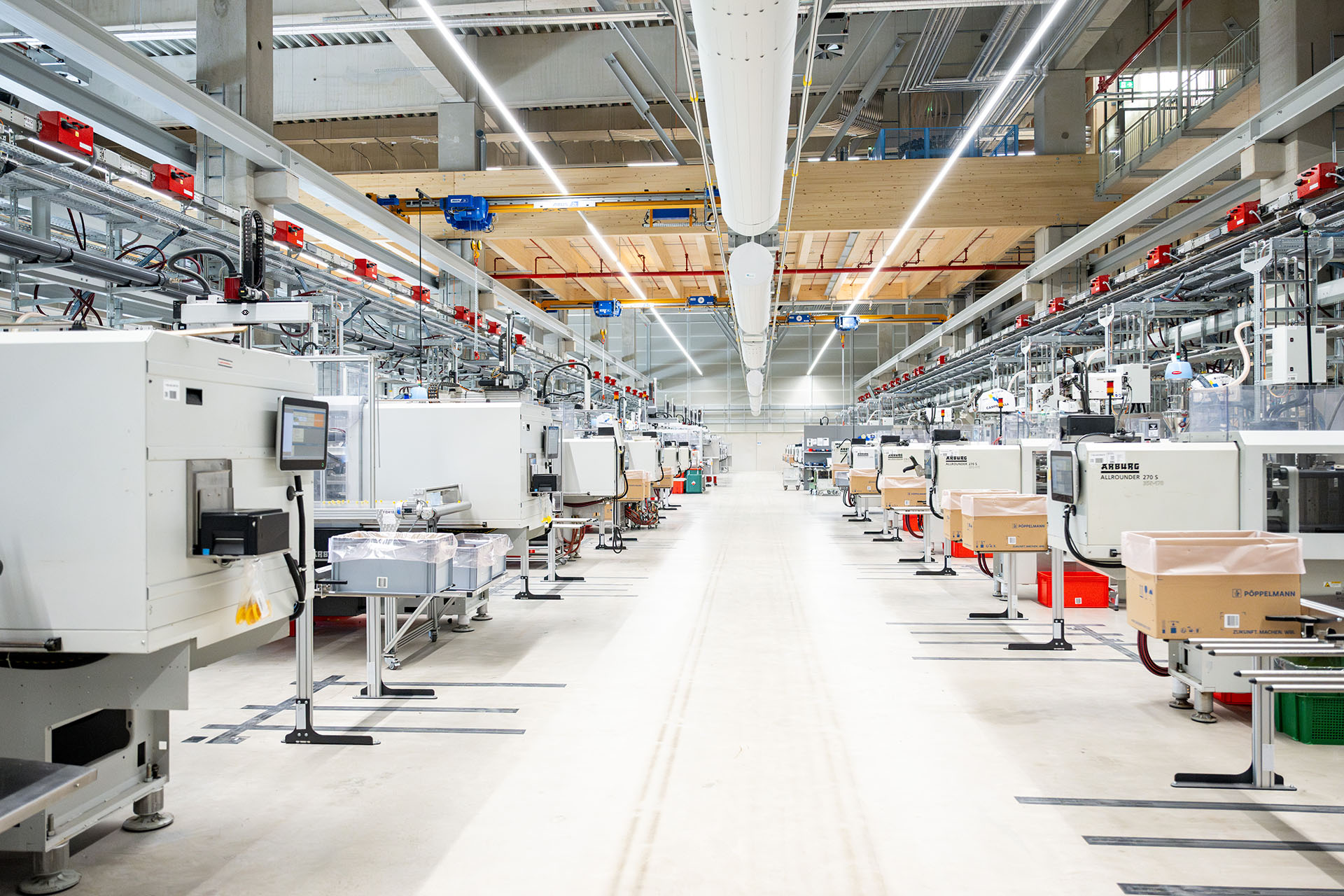
Sustainability is not a trend for the Lohner plastics processor Pöppelmann — it is firmly embedded in the company’s strategic goals. The new Production Hall 43 for the KAPSTO® business division marks another important step on this journey. At the heart of the building concept is a state-of-the-art small parts production facility, designed with a strong focus on automation, energy efficiency and modern workplace design.
Planning and implementation were carried out in accordance with the criteria of the German Sustainable Building Council (DGNB). In the DGNB pre-certification process, the Pöppelmann hall has already achieved the highest platinum rating; the final certification is imminent. Just a few weeks ago, the German Energy Agency (dena) awarded the industrial building — officially opened in June 2025 — the Energy Efficiency Award 2025 in the category “Think Big! — Complex energy transition projects.” This category recognises particularly advanced and complex energy efficiency solutions.
To supply the hall with energy, no fossil fuels are used at all. The facility runs entirely on electrical energy, primarily sourced from on-site solar generation and wind power from regional wind farms. Photovoltaic panels on the roof are complemented by additional modules on the south façade. Alongside energy efficiency and high-level automation, contemporary workplace design was a central focus of the building concept.
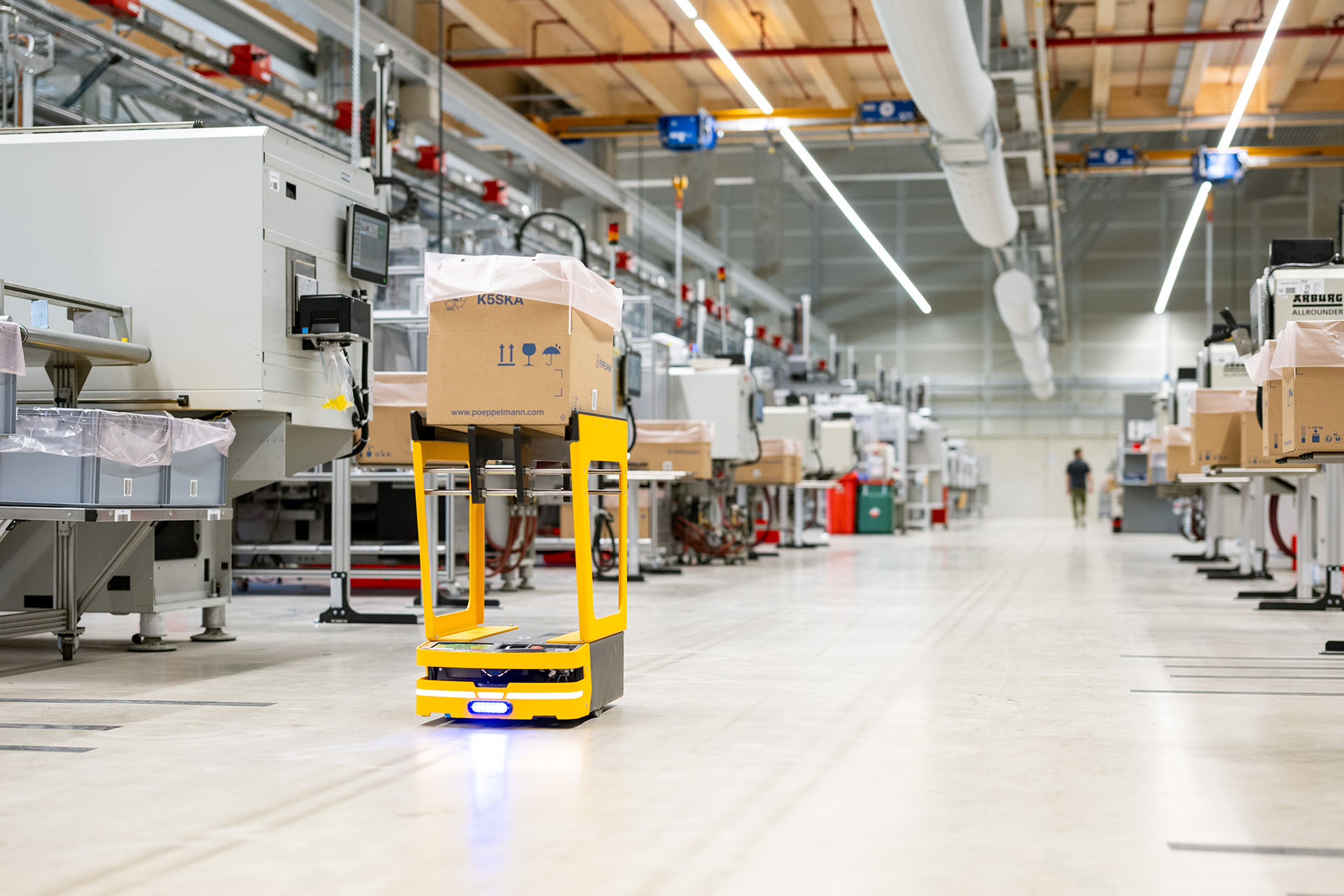
Highly automated, energy efficient and sustainable: Hall 43 showcases Pöppelmann’s commitment to modern production.
Working with regional partners has always been part of Pöppelmann’s corporate strategy. This, combined with a long history of cooperation on joint projects, provided the foundation for SCHULZ to be part of this ambitious undertaking. Our services include complete electrical installation — from lighting and network infrastructure to control and automation technology. The bespoke construction of switch cabinets was also carried out in-house.
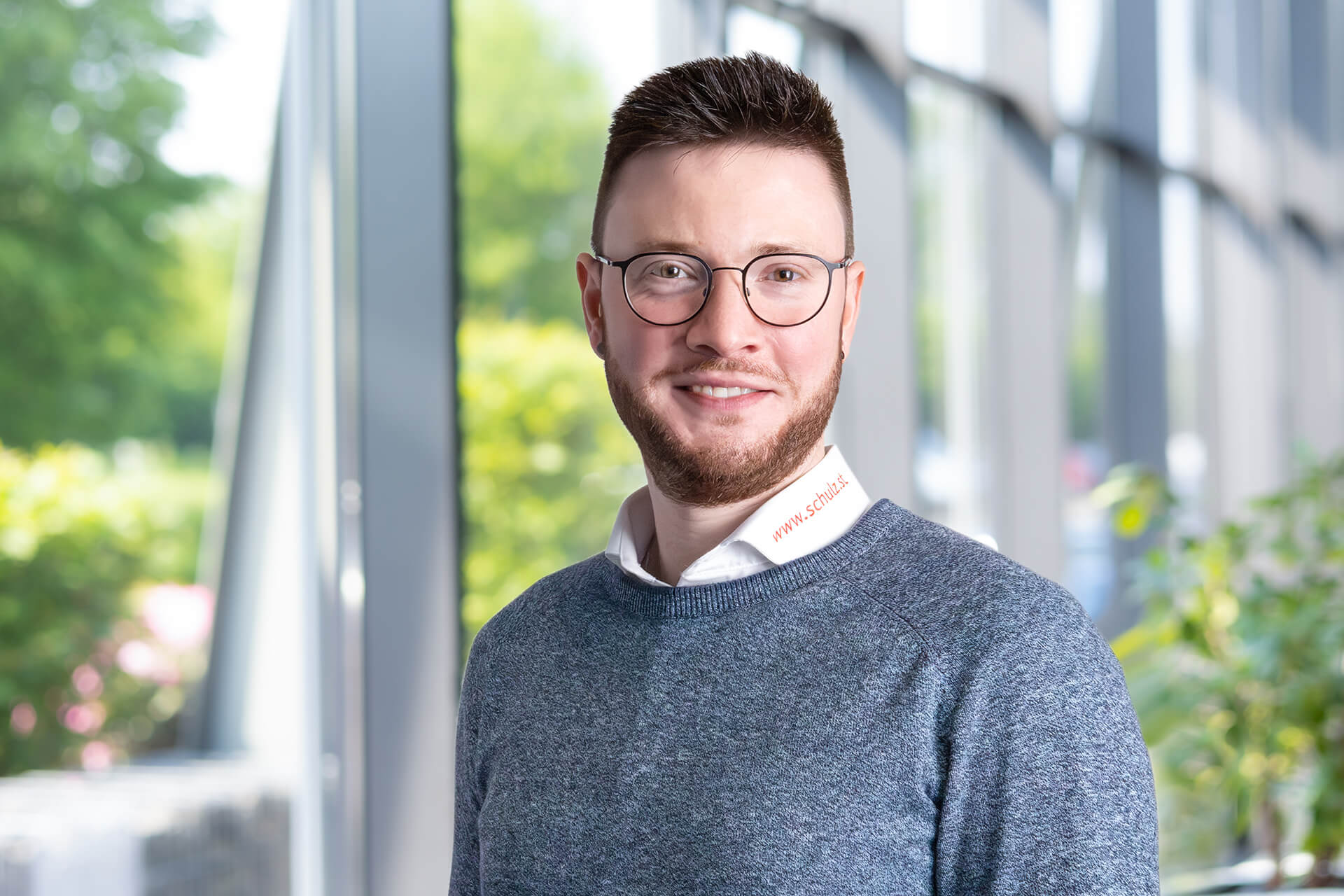
Project manager Carsten Kremer reflects on the challenges: “This project required truly forward-thinking planning down to the last detail — and we made sure that sustainability was right at the top of our to-do list. The most important factor for a successful project was close collaboration with the Pöppelmann team. Only through genuine hand-in-hand teamwork were we able to integrate every component seamlessly — from power distribution to the final sensor.”
Teamwork with a future
Interview:
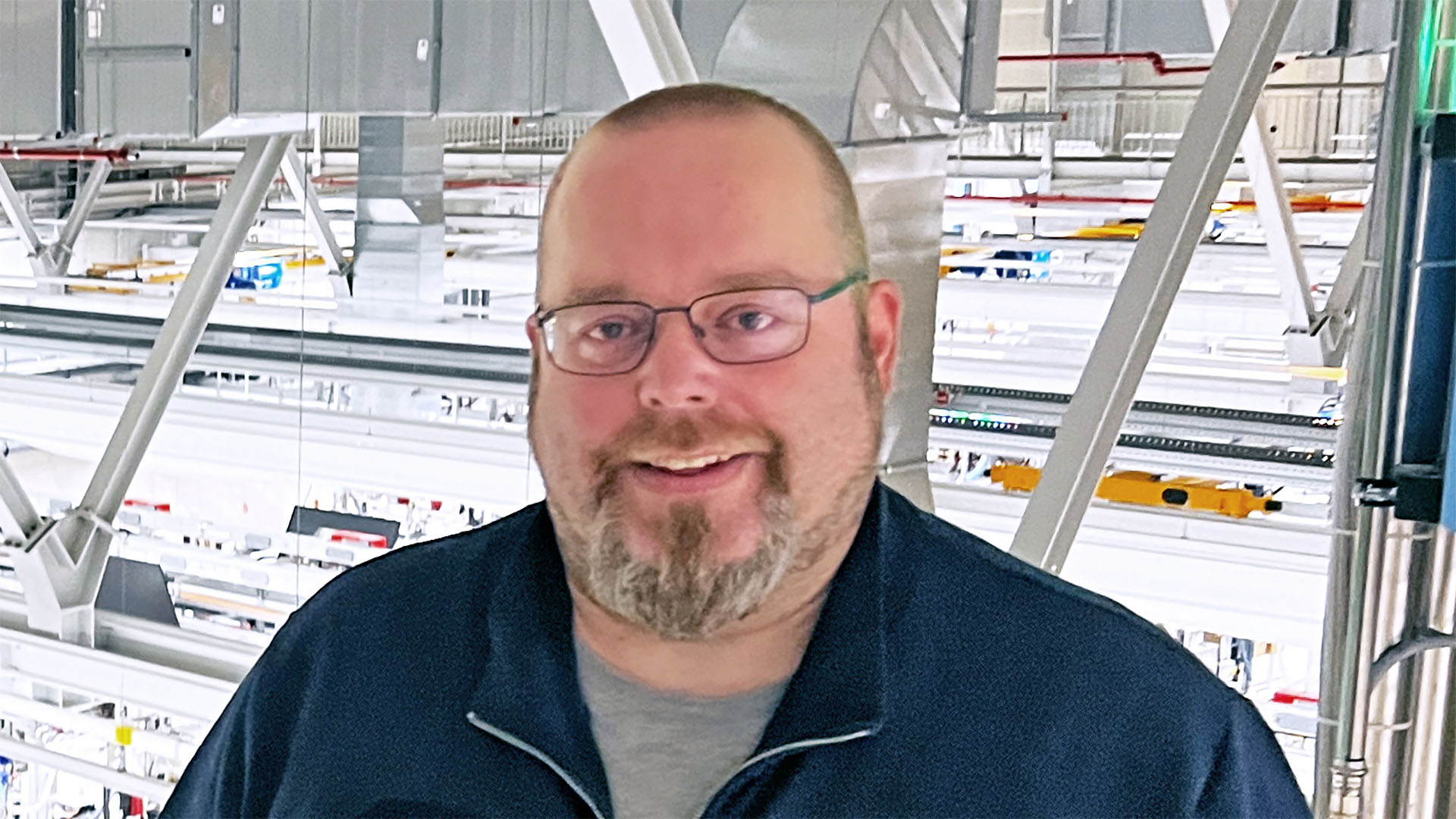
Jens Stuckenberg from Pöppelmann
In conversation, Jens Stuckenberg, Head of Building Electrical Technology at Pöppelmann, reflects on the teamwork with SCHULZ.
The new Hall 43 is regarded as one of the most important construction projects in Pöppelmann’s corporate history. What triggered it?
Our production capacities were reaching their limits — and at the same time we wanted to become more sustainable and efficient. The idea was to combine production, storage and logistics under one roof. That’s how the vision of a hall that blends ecological responsibility with technological innovation came about.
How significant was the topic of sustainability during planning?
At Pöppelmann, we have long placed great importance on sustainability at every level of the business. We wanted a facility that saves energy and conserves resources over the long term. That’s why we invested in photovoltaic systems, propane heat pumps, rainwater harvesting and a completely CO₂-neutral energy supply.
What was the basis for selecting partner companies for the project?
Sustainability was key. We wanted partners from the region who could handle a project of this scale, who have short logistics routes and a genuine understanding of innovative construction and resource-efficient solutions with a future. SCHULZ was involved as a partner for electrical and automation engineering.
What was your experience of collaboration with SCHULZ?
We’ve worked together for many years. In a project of this size, trust is crucial — and we had that from the start. The SCHULZ team was flexible, solution-oriented and always on equal terms. Importantly, there was always someone available as a contact person, even in challenging situations that went beyond normal working hours.
What was the highlight for you personally?
Definitely seeing it all come together. A vision became reality — and now, standing in this huge hall, every cable, every piece of equipment and every control system is running with maximum energy efficiency. That’s a proud moment.
What’s next?
Hall 43 is a milestone, but we’re continuing to modernise other facilities step by step. We’ll of course be happy to rely on well-tried partnerships like the one with SCHULZ again. Because when you tackle a project of this scale together as a team, not only does the facility grow — but so does the trust.
Facts & Figures
Gross floor area
Total usable area
Green roof area
Photovoltaic system (roof)
Rainwater storage
Injection moulding machines
16,500 m2
23,400 m2
approx. 10,500 m²
2,000 kWp — generating approx. 1.5 GWh annually
650 m3
up to 220
for plastic protection solutions in automotive, mechanical engineering, hydraulics and many other industrial sectors