Special-purpose Machinery
When standard solutions are no longer enough: tailored solutions for new manufacturing realities
Rising requirements, fluctuating markets and increasing pressure to improve efficiency are putting manufacturing processes to the test. Special-purpose machinery provides solutions precisely where standard equipment reaches its limits.
Production is running. For now.
But behind the scenes, pressure is mounting. Output volumes fluctuate, markets are difficult to predict, skilled workers are in short supply, and expectations around quality and speed continue to increase. What worked yesterday can quickly become a risk today.
Many companies find themselves at exactly this point: their processes are reaching their limits, their equipment is becoming less flexible, and standard solutions are no longer enough. This is where special-purpose machinery comes into its own.
“Our customers do not come to us with a finished solution – they come to us with a challenge,” says Tobias Möller, head of special-purpose machinery at SCHULZ. “That is where we start: we listen, analyse and develop a solution that truly fits.”
From the first conversation to the finished system – everything from a single source
The machine is never the starting point for us. The process is. How do individual production steps interact? Where do bottlenecks occur? Where are time, quality or resources being lost? Only once these questions have been answered does the right solution begin to take shape.
“We support our customers from the initial idea through to the finished system,” explains the operations manager. “That includes design, assembly, factory acceptance testing and commissioning. And even after start-up, we remain a trusted partner, helping to ensure long-term reliability and efficiency.”
This end-to-end approach is no coincidence. It is part of who we are. Only when mechanical engineering, automation and software work together seamlessly can a system deliver more than functionality – it can create a real competitive advantage.
What manufacturers really need today
Conversations with production managers reveal a common pattern: regardless of industry or product, the challenges are remarkably similar.
Economic conditions remain challenging. Investment decisions are made more cautiously and every investment must demonstrate clear value. At the same time, flexibility has become a key requirement. Production systems are no longer expected to manufacture a single product. They need to accommodate multiple variants while keeping changeover times to a minimum.
There is also growing demand for future-proof solutions. Systems must not only perform today but remain adaptable tomorrow – whether through expansion, additional process steps or increasing production requirements.
Another critical factor is the shortage of skilled labour. Tasks that were once compensated for through experience and manual intervention must now be automated and consistently controlled.
“Many of our customers are asking themselves a fundamental question: how can I keep my production running efficiently in the long term?” says Bernd Mühl, special-purpose machinery expert at SCHULZ. “Smart automation is no longer a nice-to-have. In many cases, it is essential for remaining competitive.”
Flexibility is becoming the decisive factor
What does this mean for modern production solutions? Above all, they need to be adaptable.
Products evolve more quickly, batch sizes are becoming smaller and requirements increasingly complex. Production systems must respond quickly, reliably and with maximum flexibility. At the same time, expectations regarding transparency and data utilisation continue to grow. Companies want greater visibility into their processes and better use of production data.
Existing equipment is also attracting more attention. Rather than investing in entirely new systems, many businesses are looking for ways to modernise and enhance what they already have.
“Retrofits and migration projects are becoming increasingly important,” explains Mühl. “It is about building on existing investments intelligently rather than starting from scratch.”
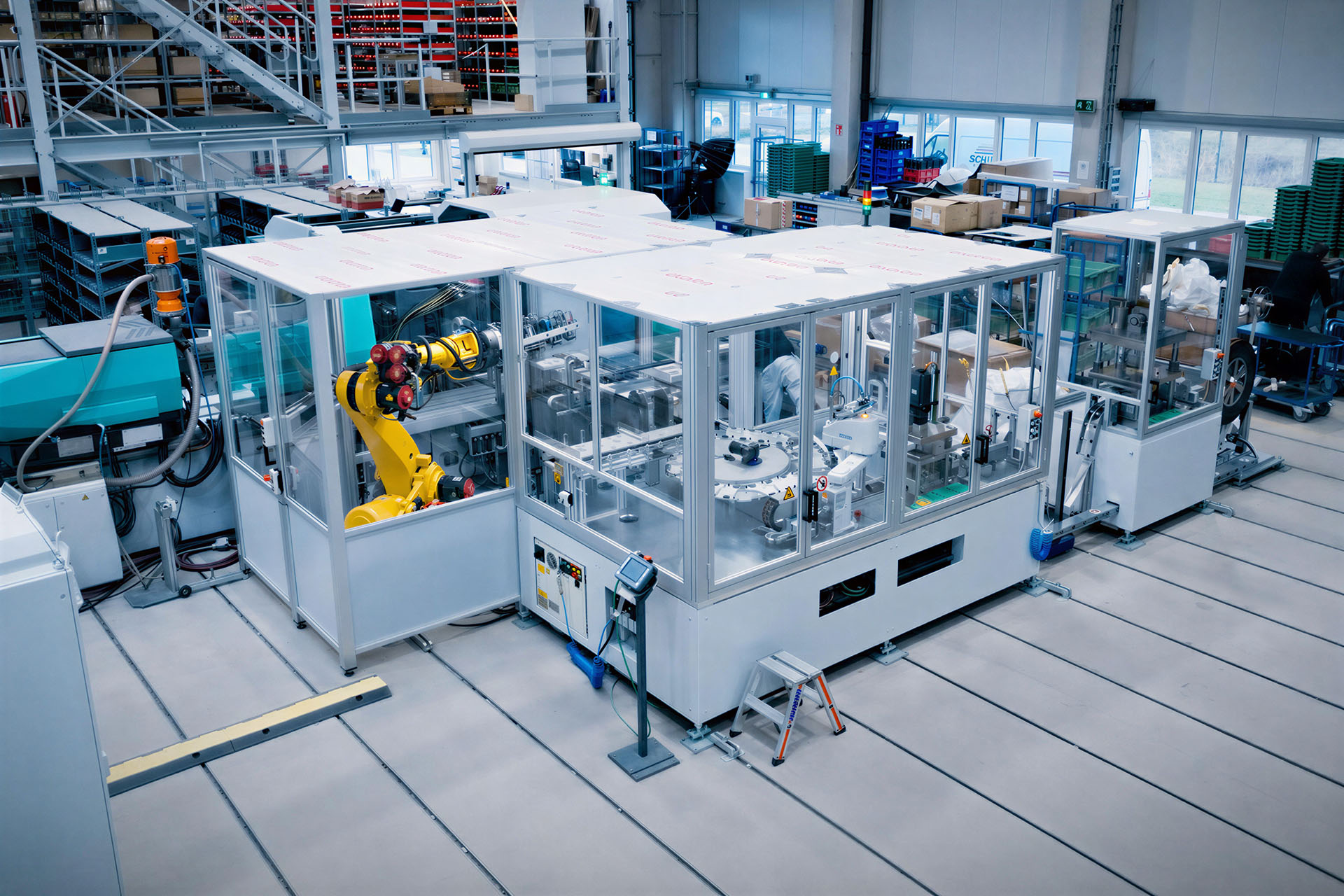
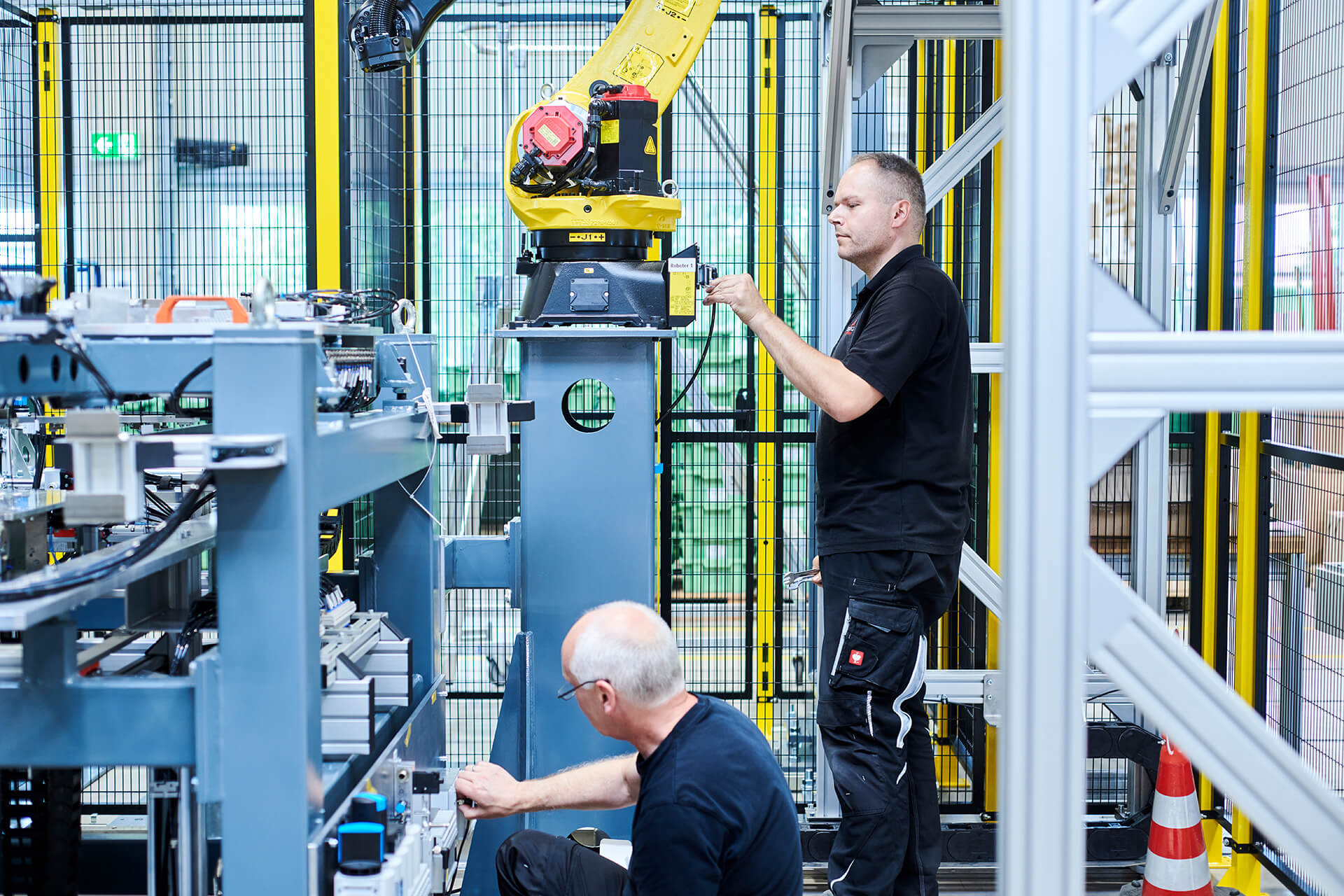
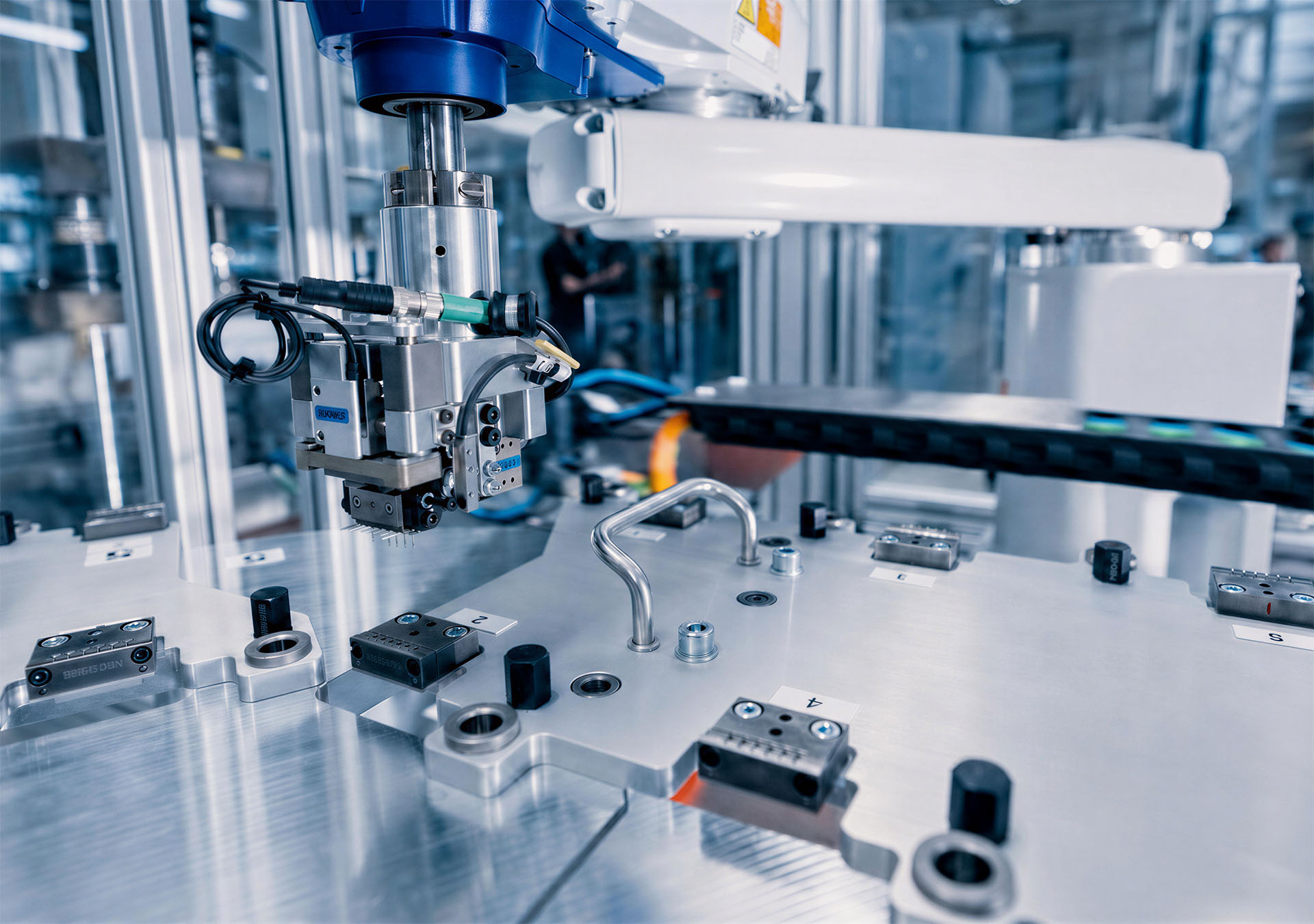
Overall view of an insert moulding automation cell. Multiple automated process steps – from component feeding and processing through to quality inspection – are intelligently integrated to ensure stable and reliable series production.
Technology matters – but understanding makes the difference
What sets us apart in special-purpose machinery is not just technology. It is our understanding of the bigger picture.
Of course, areas such as gripping technology, automation and software play a central role. When it comes to handling complex components, we have built up extensive expertise through numerous projects across a wide range of industries. This experience enables us to identify effective solutions quickly, even for new challenges.
The real added value, however, comes from bringing everything together. We combine mechanical engineering, electrical engineering and software development, supported by in-house capabilities such as control panel manufacturing and a high level of production depth. The result is solutions that do not simply work technically, but perform as an integrated whole.
“We do not think in terms of individual components – we think in terms of processes,” says Marc Wendt, head of project management. “That overall understanding is what enables us to deliver even complex requirements with confidence.”
As part of the SCHULZ Group, we also benefit from a broad network of expertise. Experience gained across different industries flows directly into new projects, resulting in solutions that are often more robust, better engineered and more cost-effective. This combination of technical expertise and practical experience delivers exactly what our customers need: solutions that not only look good on paper but also prove themselves in day-to-day operation.
“Our customers do not come to us with finished solutions. They come to us with challenges. We listen, analyse and develop the solution that fits.”
Tobias Möller
Head of special-purpose machinery, Bremen
Added value you can feel in day-to-day operations
Ultimately, our customers are not investing in technology alone. They are investing in results. Systems must operate reliably, be easy to use and continue performing under changing conditions. At the same time, they should improve transparency and help identify opportunities for optimisation.
One key difference often becomes apparent at a very early stage of the project. Even during the sales process, we think in technical and process-oriented terms – not abstractly, but with the future application firmly in mind. “Our customers gain a clear understanding of what their solution could look like from a very early stage,” says Bernd Mühl. “Detailed concepts and, where appropriate, 3D designs make the solution tangible and demonstrate exactly where the value lies.”
This creates confidence and supports more informed decision-making. “Our customers often use these concepts internally as well, whether for presentations or stakeholder discussions,” adds Marc Wendt.
Looking ahead: technology as an opportunity
Special-purpose machinery continues to evolve – and so do we.
New technologies such as artificial intelligence, optical sensing and machine learning are creating new opportunities to analyse and optimise processes with even greater precision. Systems are becoming smarter, more connected and increasingly autonomous. Yet despite all this innovation, one principle remains unchanged. “Technology is never an end in itself,” says Möller. “It must always deliver a clear benefit – for the process, for production and for our customers.”
In the end, special-purpose machinery is not about machines. It is about solutions – solutions that create stable processes, greater flexibility and production systems that remain fit for the future. Or, as our sales colleague puts it: “We do not build off-the-shelf systems. We develop solutions tailored to our customers and help them future-proof their production.”
Applications in special-purpose machinery

Assembly and handling technology
- Handling a wide range of products and components
- Loading and unloading operations, for example on production machinery
- Material feeding systems, including bulk materials

Manufacturing technology
- Assembly
- Punching
- Pressing
- Labelling
- Laser marking

In-line quality control
- Sensor technology
- Vision and camera systems

Packaging and palletising
- Custom packing patterns
- Palletising stations

Visualisation and supervisory control
- Process visualisation
- Recipe and user management

Technical documentation
- Risk assessments
- Operating instructions
- Compliance with the new EU Machinery Regulation
Real-world examples
Our projects demonstrate the challenges our customers face in practice – and how tailored solutions can address them effectively.
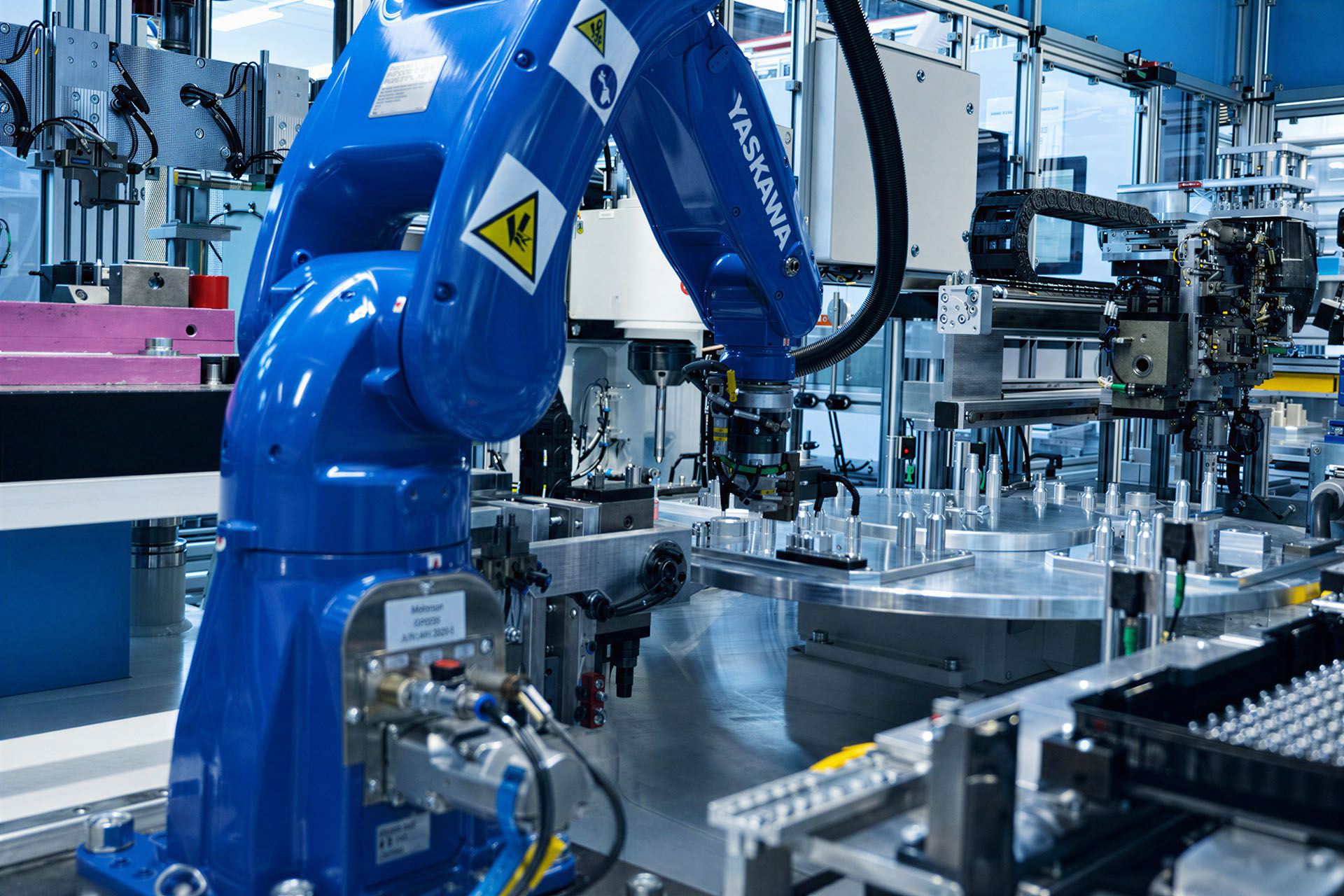
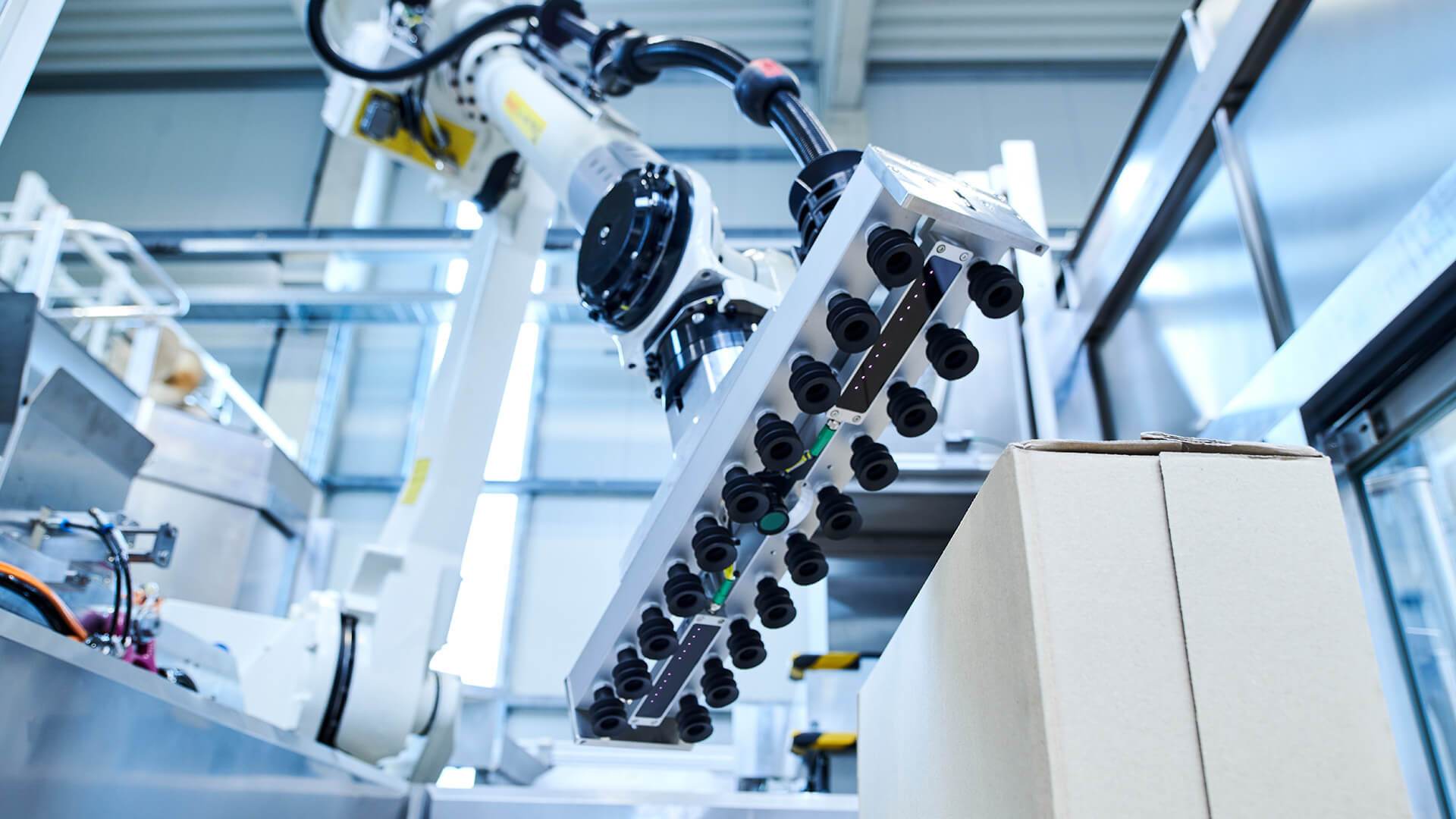
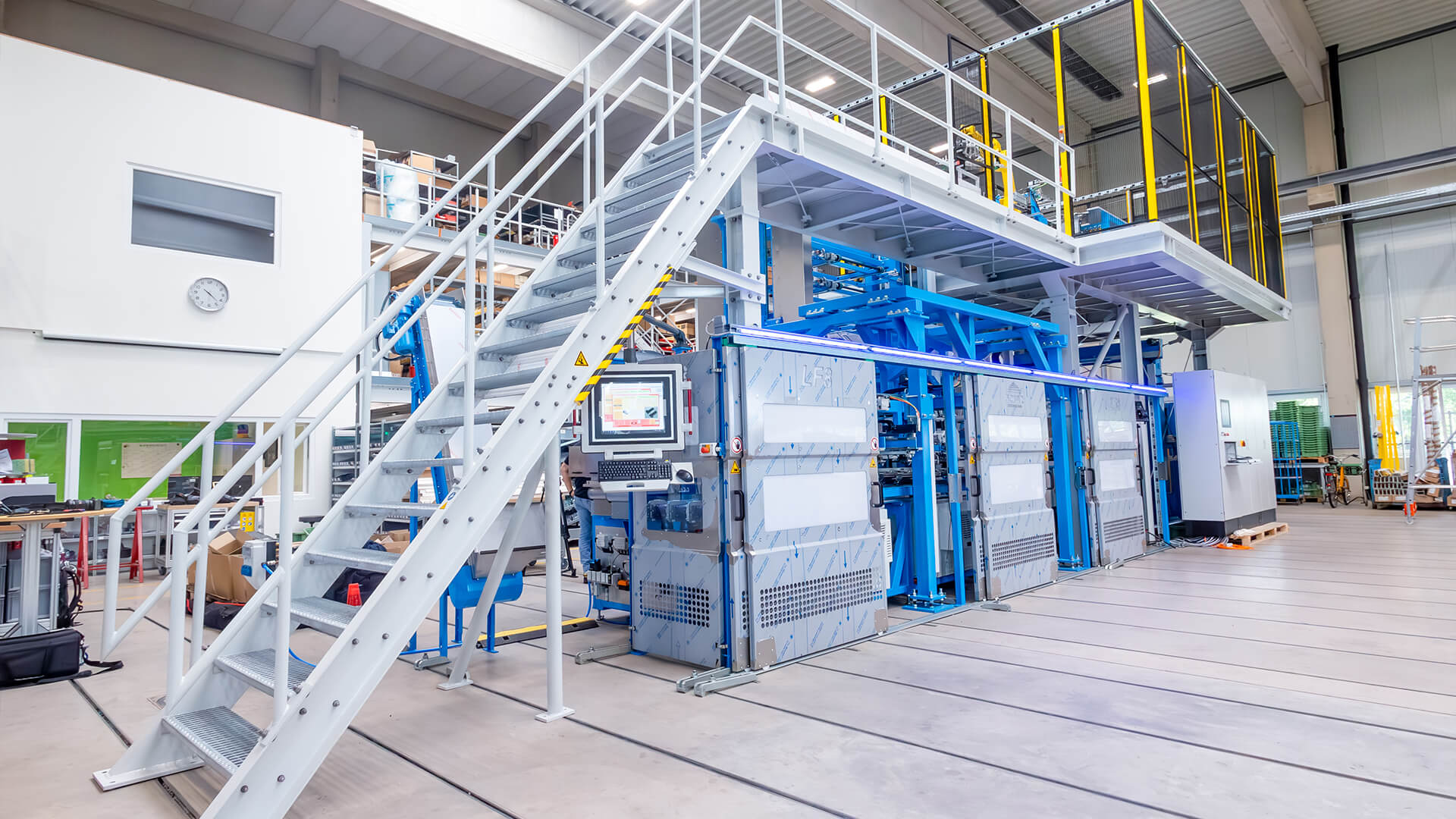
In the end, it is not just about machines – it is about solutions that make processes more stable, more flexible and fit for the future.
Bernd Mühl, special-purpose machinery sales